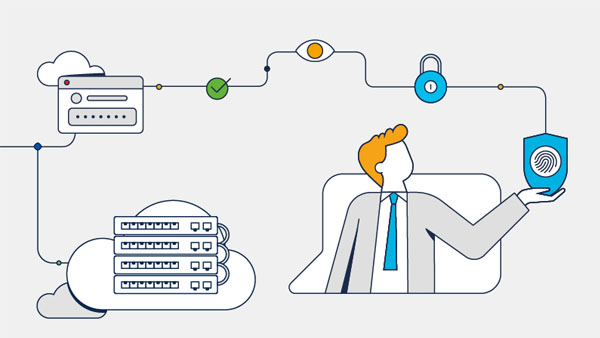
The role of AI in threat detection
Artificial intelligence (AI) and machine learning (ML) have fundamentally transformed threat detection from a reactive, rule-based process into a proactive, adaptive discipline. In modern security environments, the sheer volume of data generated by networks, endpoints, and cloud applications is far too vast for manual analysis. AI acts as a force multiplier, continuously ingesting and analyzing this data to establish baselines of "normal" behavior. By identifying deviations from these patterns, AI can flag potential threats in real time, often before they manifest as a full-scale breach.
The integration of AI is critical because it addresses the persistent challenge of alert fatigue. Traditional security tools often rely on static signatures, which can generate thousands of alerts, many of which are false positives. AI algorithms excel at filtering this noise, prioritizing high-fidelity alerts that require immediate human intervention. This allows security operations teams to focus their expertise on the most significant risks rather than manually sifting through mountains of benign data.
Beyond efficiency, the role of AI is to provide predictive intelligence. By analyzing historical attack patterns and global threat telemetry, AI models can anticipate emerging tactics, techniques, and procedures (TTPs) used by adversaries. This capability enables organizations to shift from a posture of constant defense to one of strategic resilience. Ultimately, AI does not replace human analysts; instead, it provides them with the context and clarity needed to make informed decisions, ensuring that security teams can stay ahead of increasingly sophisticated and automated threats.
The integration of frontier models—large-scale, highly capable AI systems trained on vast, diverse datasets—represents the next evolution in threat detection. While traditional machine learning models are often optimized for specific, narrow tasks, frontier models bring advanced reasoning and natural language processing capabilities to the security stack. This allows them to interpret and correlate disparate data sources—such as technical security logs, global threat intelligence reports, and incident response playbooks—with a level of semantic understanding that was previously unattainable.
In a security operations context, these models act as a sophisticated layer of cognitive support. They can ingest and synthesize massive amounts of unstructured data, such as security analyst notes or complex threat bulletins, to provide context-rich summaries of an ongoing incident. By translating dense technical telemetry into clear, actionable insights, frontier models help bridge the gap between deep technical investigation and high-level decision-making.
Furthermore, frontier models enhance proactive defense by identifying subtle, non-obvious patterns across global threat landscapes. Because they are trained on a broader range of information, they are uniquely positioned to recognize the early indicators of novel attack vectors that might evade conventional detection methods. By automating the synthesis of complex information and surfacing relevant context, these models enable security teams to accelerate their investigative workflows and adapt their defensive posture to emerging threats with greater speed and precision.